
Is Korean Food Halal? Dish-by-Dish Ingredient Guide
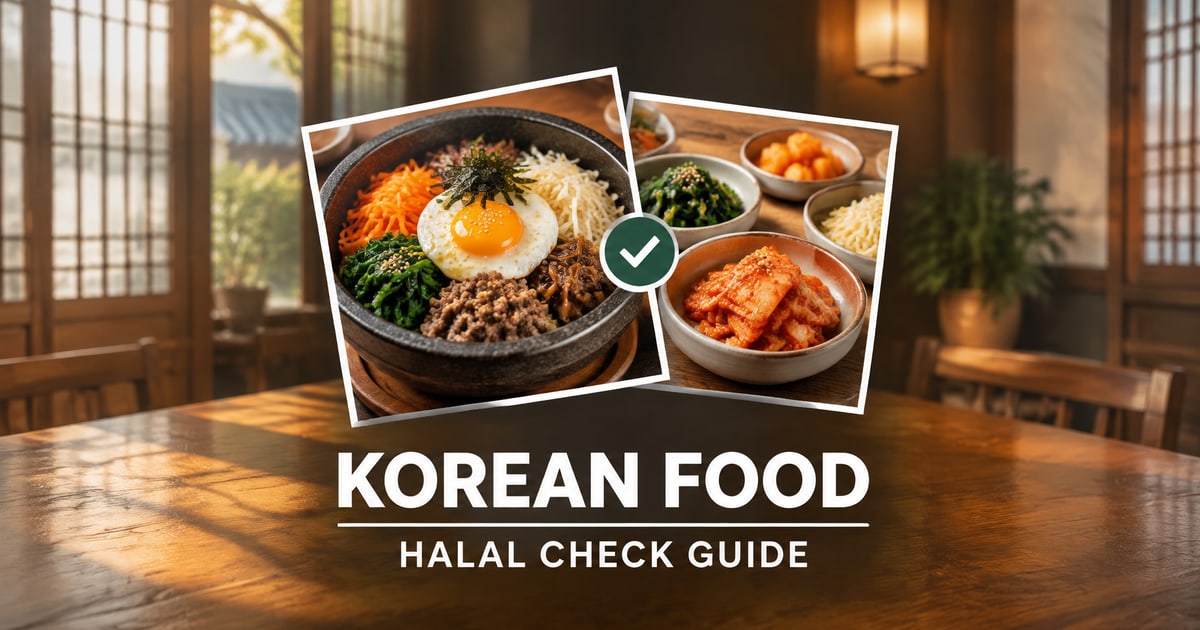
Most everyday Korean dishes are not automatically halal because of non-halal meat, pork-based broths, fermented pastes containing ethanol, or shared fryers. Here is what to check dish by dish and how to ask staff in Korean.
The short answer before you order
Traditional Korean cuisine relies heavily on vegetables, rice, seafood, and fermented seasonings, which makes many dishes look vegetarian or simple at first glance. In practice, ordinary restaurants in South Korea rarely use halal-slaughtered meat unless they specifically state so, and seemingly meat-free dishes often contain pork bone broth, beef seasoning powder, fish sauce, or cooking wine (mirim or cheongju).
How to use this guide
Recipes vary widely from one kitchen to the next. Use the breakdown below to know which ingredients to ask about, and always confirm meat sources, broths, and seasonings with restaurant staff before ordering.
Popular Korean dishes at a glance
The table below summarizes the main halal checkpoints for the Korean dishes travelers ask about most often, including raw beef (yukhoe), bibimbap, kimchi, tteokbokki, and Korean fried chicken.
| Dish | Default status | Key checkpoints |
|---|---|---|
| Bibimbap (비빔밥) | Depends on topping & sauce | Non-halal beef; gochujang ethanol (주정) |
| Kimchi (김치) | Seafood-based, usually meat-free | Fish sauce/salted shrimp OK for most; check meat broth |
| Yukhoe (육회) | Not halal in regular shops | Non-halal raw beef; possible mirim/cooking wine |
| Tteokbokki (떡볶이) | Check broth & stall | Gochujang, beef powder (다시다), nearby pork sundae |
| Bulgogi & Galbi (불고기·갈비) | Not halal unless specialized | Non-halal meat; mirim/cheongju marinade |
| Korean Fried Chicken (치킨) | Not halal in regular chains | Non-halal chicken; shared fryer oil |
| Sundubu-jjigae (순두부찌개) | Often meat-broth based | Pork oil or bone stock even in seafood versions |
| Grilled Fish (생선구이) | Easier to verify | Cooking wine glaze; meat/ham in banchan |
Reading Korean food labels at convenience stores and marts
Under South Korea's food allergen labeling rules (MFDS), pork (돼지고기), beef (소고기), and chicken (닭고기) must be declared in a shaded allergy box beside the ingredient list (원재료명)—even as trace seasoning powders.

- Direct vs. shared facility: '돼지고기 함유' means pork is an ingredient; '같은 제조시설에서 제조' means a shared factory line only.
- Non-allergen keywords in 원재료명: Scan for 주정 (added ethanol), 미림·청주 (cooking wine), 젤라틴 (gelatin), and 돈지·우지 (lard/beef tallow).
- Domestic vs. export packs: Korean ramyeon or snacks that carry a halal mark overseas often use a different non-certified formula inside Korea.
Korean street food, markets, and cafes: what to check
Street stalls in Myeongdong, Gwangjang Market, and Hongdae rarely display ingredient sheets. Check the oil, fillings, and shared trays before ordering.
| Item | Main risk | Quick check |
|---|---|---|
| Hotteok (호떡) | Griddle shortening / margarine | Confirm vegetable oil (식용유); skip savory meat fillings |
| Bungeoppang (붕어빵) | Mold grease; custard gelatin | Red bean (팥) is simpler than custard; check mold oil |
| Gyeran-ppang (계란빵) | Ham or bacon toppings | Pick plain egg only on a separate tray |
| Odeng & Sundae (어묵·순대) | Beef broth; nearby pork sundae | Check soup base; avoid shared pots next to sundae |
| Bingsu & bakery (빙수·카페) | Gelatin, rum essence, shortening | Pick fruit/red-bean bingsu or plain drinks without syrups |
Shopping at Korean convenience stores (CU, GS25, 7-Eleven)
Late at night or between cities, convenience stores are the easiest stop. Use Naver Papago's camera translation on the back label alongside the allergy box—manufacturers update formulas, so treat these popular item examples as starting checkpoints only.
| Popular item example | Typical status | Label checkpoint |
|---|---|---|
| Roasted eggs (구운란) · plain rice (햇반) | Simple staple | Pick plain versions; skip meat-sauce rice bowls |
| Banana milk (바나나맛우유) · plain soy milk | Usually meat-free | Check flavored cups/yogurts for gelatin or alcohol flavor |
| Plain roasted seaweed (조미김) · almonds | Easy snack | Salt/vegetable oil only; avoid BBQ or meat powders |
| Choco Pie · gummies (초코파이·젤리) | High caution | Commonly contain pork/beef gelatin (젤라틴) |
| Domestic Buldak · Shin Ramyun (내수용) | High caution | Non-certified domestic recipe; often has meat extract |
| Triangle kimbap · bento (삼각김밥·도시락) | Check closely | Ham, meat mayo/sauces, or mirim in seasoned rice |
Useful Korean phrases & show-to-staff card
Showing or saying a short, direct sentence in Korean helps staff check the kitchen accurately rather than guessing what halal means.
Show-to-staff Korean request card (show your screen at the counter)
안녕하세요. 저는 돼지고기, 일반 육류(소고기·닭고기), 고기 육수, 젤라틴, 조리용 술(미림·청주·주정)을 먹지 않습니다. 이런 재료가 들어가지 않은 메뉴나 빼고 조리할 수 있는 메뉴를 알려주실 수 있나요? (Hello. I do not eat pork, regular beef/chicken, meat broth, gelatin, or cooking alcohol such as mirim/cheongju/ethanol. Could you show me dishes made without these ingredients?)
| What you want to ask | Korean phrase | Pronunciation |
|---|---|---|
| Does this dish have pork, meat, or ham? | 여기에 돼지고기나 고기, 햄이 들어가나요? | Yeogi-e dwaejigogi-na gogi, haem-i deureoganayo? |
| Is meat broth used in the soup? | 육수에 고기가 들어가나요? | Yuksu-e gogi-ga deureoganayo? |
| Is cooking alcohol (mirim or soju) used? | 조리할 때 술이나 미림이 들어가나요? | Jorihal ttae sur-ina mirim-i deureoganayo? |
| Please make it without meat or gochujang. | 고기와 고추장은 빼고 만들어 주세요. | Gogi-wa gochujang-eun ppaego mandeureo juseyo. |
| Do you cook pork on the same grill or pan? | 돼지고기랑 같은 불판이나 팬을 쓰나요? | Dwaejigogi-rang gateun bulpan-ina paen-eul sseunayo? |
| Is there any meat or ham in the side dishes? | 밑반찬 중에 고기나 햄이 들어간 게 있나요? | Mitbanchan jung-e gogi-na haem-i deureogan ge innayo? |
| Do you have seafood or vegetable-only dishes? | 고기 없이 해산물이나 채소만 들어간 메뉴가 있나요? | Gogi eopsi haesanmur-ina chaeso-man deureogan menyu-ga innayo? |
| Is this fried in vegetable oil only? | 식물성 기름(식용유)으로만 조리하나요? | Singmulseong gireum(sigyongyu)-euro-man jorihanayo? |
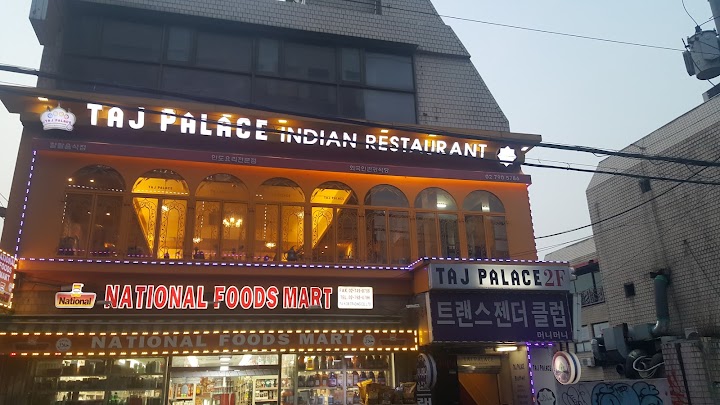
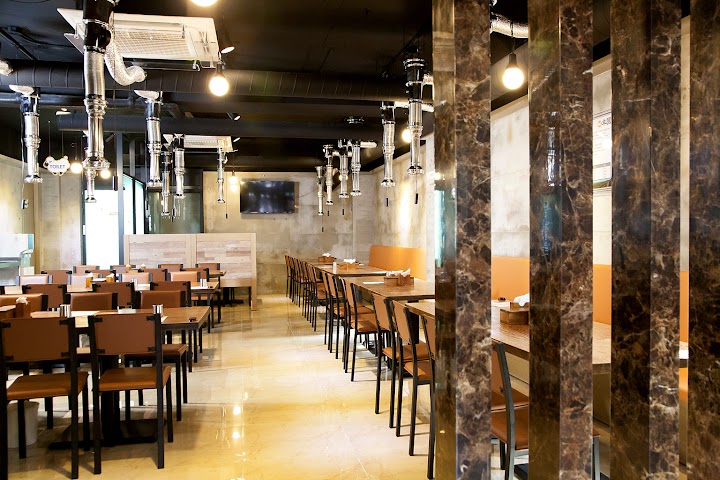
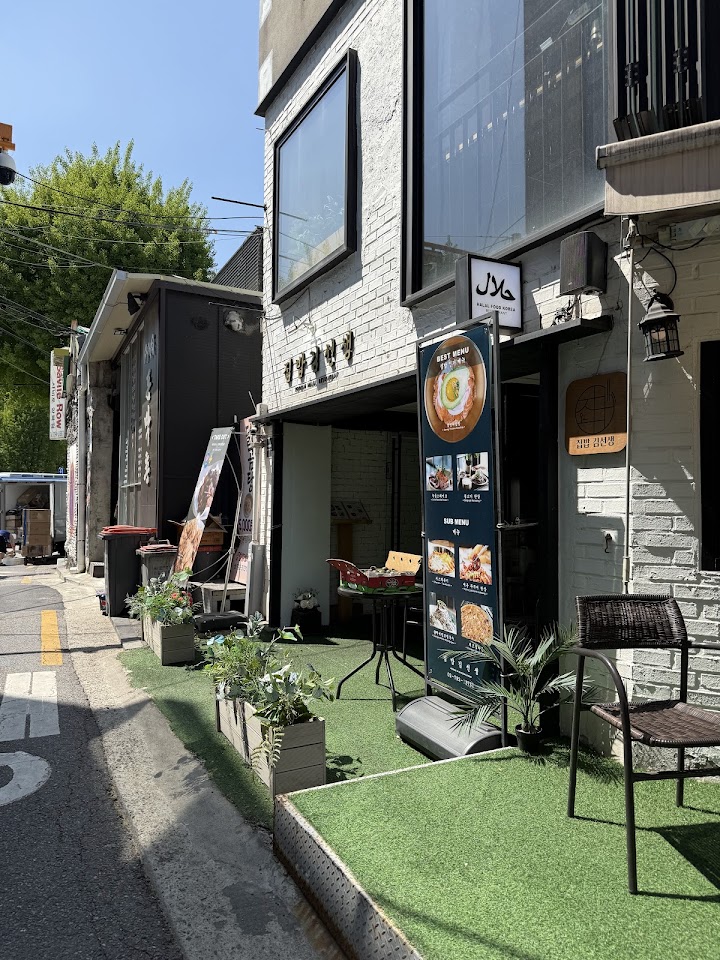
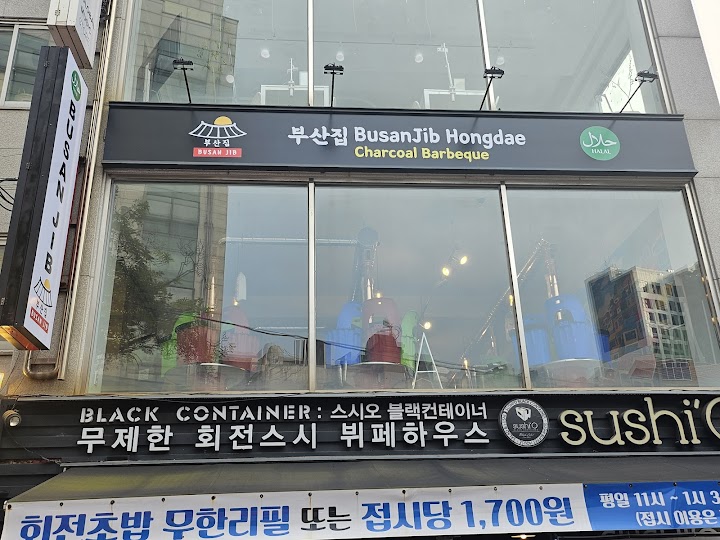
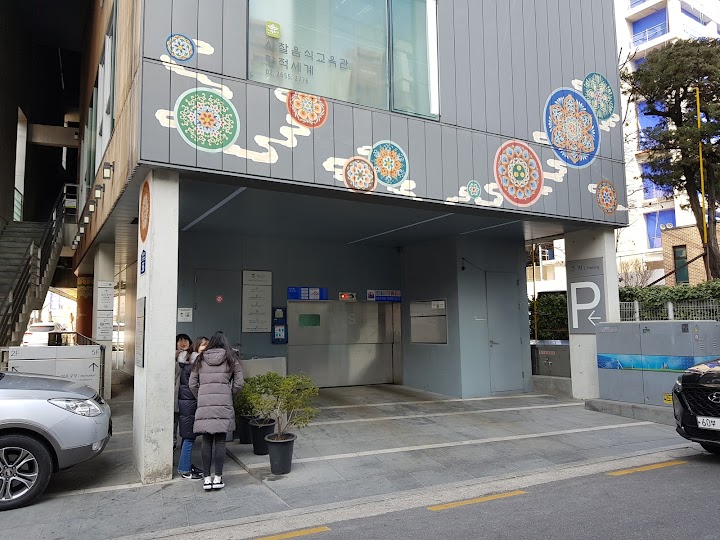
If you specifically want Korean BBQ, bulgogi, or traditional Korean meals without worrying about shared pork grills or mirim marinades, start with dedicated halal Korean restaurants, halal lamb BBQ spots, or Korean temple-cuisine venues and inspect each place's latest source details on Halalmap.
Frequently asked questions
- Is yukhoe (Korean beef tartare) halal?
- In ordinary Korean restaurants, yukhoe is not halal because the beef is not halal-slaughtered and marinades sometimes include cooking wine. Only order yukhoe at a restaurant that explicitly confirms halal-slaughtered beef and alcohol-free seasoning.
- Is kimchi generally safe for Muslims to eat?
- Basic cabbage kimchi does not contain pork or alcohol, though traditional recipes use fermented shrimp or fish sauce. In restaurants, ask whether meat broth or pork was added, or look for vegan kimchi when buying packaged jars.
- Can I find halal-certified Korean dishes like bulgogi or fried chicken in Seoul?
- Yes. Several halal-certified and Muslim-owned Korean restaurants—especially around Itaewon, Myeongdong, and Jongno—prepare bulgogi, bibimbap, samgyetang, and fried chicken using halal-sourced meat. Check each place page on Halalmap for the latest source notes and confirm on-site.
- Are Korean instant noodles sold in Korean convenience stores halal if the same brand is halal at home?
- Not necessarily. Several Korean food manufacturers run separate halal-certified export lines for Southeast Asia or the Middle East while selling non-certified domestic formulas inside South Korea. Always inspect the back label and allergy box on the exact package.
- Are Korean vegan or temple-food restaurants automatically halal?
- They avoid meat, seafood, and dairy, which eliminates pork and non-halal slaughter concerns. However, vegan standards in Korea still permit plant-derived ethanol or cooking wine in some sauces, so ask whether alcohol or mirim is used in dressings and stews.
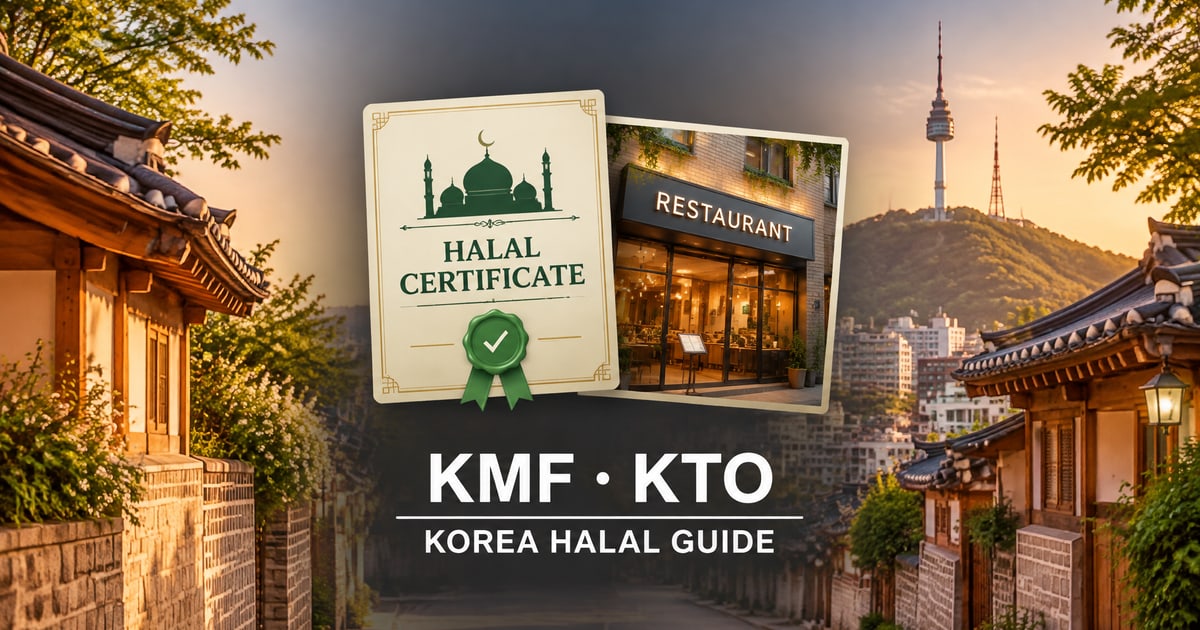
Halal Certification in South Korea: KMF & KTO Labels Explained
In South Korea, a 'Muslim-friendly' sticker does not mean the same thing as official halal certification. Learn how KMF certification differs from KTO's four restaurant categories and what to verify on-site.
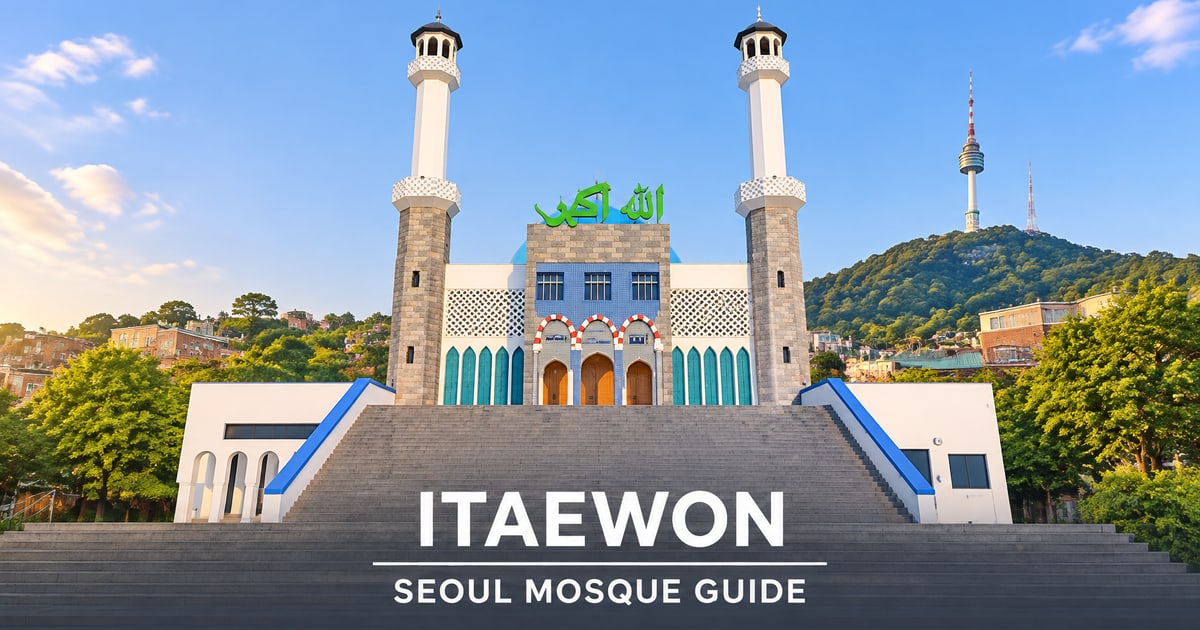
Itaewon Halal Food & Seoul Central Mosque Walking Guide
Itaewon and the uphill Usadan-ro lane around Seoul Central Mosque form South Korea's densest halal dining and grocery district. Here is how to plan transit, prayer, dining, and shopping in one walking route.

Mosques & Prayer Rooms in Seoul: Practical Visitor Guide
Outside Itaewon, prayer spaces in Seoul are mostly compact prayer rooms inside universities, major shopping complexes, hospitals, or community centers. Here is what to expect regarding wudu, access rules, and daily planning.
Have a question about this topic?
Ask fellow Muslim travelers in the Halalmap community or share your latest on-the-ground experience.
Check before visiting
Halalmap does not issue halal rulings. Menus, ingredients, certification status, and prayer facilities can change over time, so please confirm directly with staff or facility operators before visiting.