
Halal Certification in South Korea: KMF & KTO Labels Explained
In South Korea, a 'Muslim-friendly' sticker does not mean the same thing as official halal certification. Learn how KMF certification differs from KTO's four restaurant categories and what to verify on-site.
Why halal labels in Korea often confuse travelers
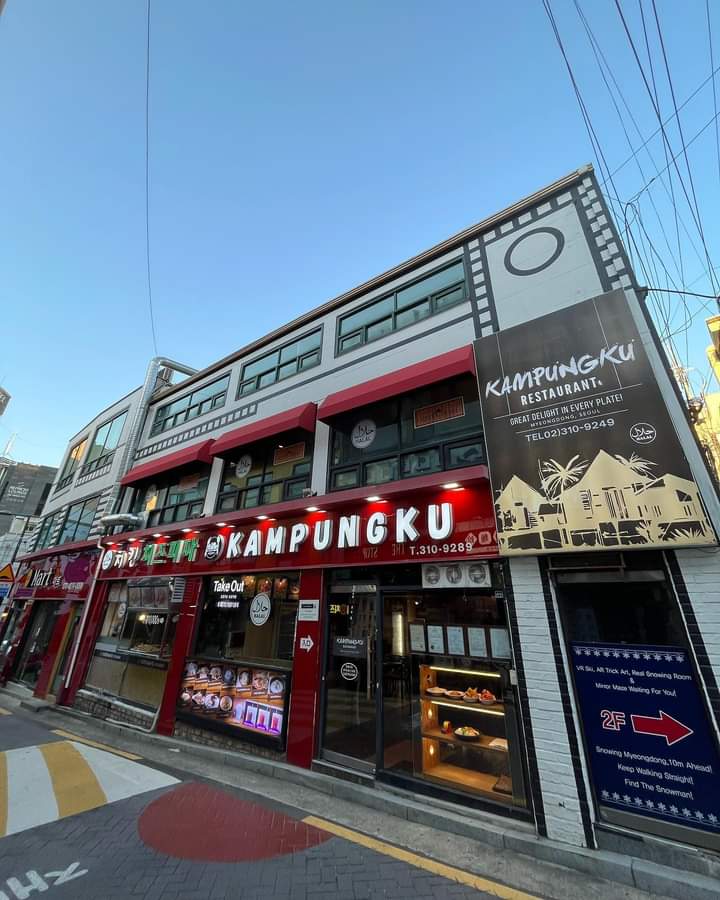
Many Muslim visitors arrive in South Korea expecting a single national halal logo similar to JAKIM in Malaysia or MUIS in Singapore. In Korea, official halal certification for restaurants is relatively small in number, while tourism brochures and restaurant storefronts frequently display broader 'Muslim-friendly' or 'pork-free' classifications.
Knowing which body issued a label—and what that label actually checks—prevents misunderstandings when choosing where to eat.
KMF certification vs. KTO's four categories
The Korea Muslim Federation (KMF) is Korea's primary Islamic body issuing halal certificates for food products and restaurants. Separately, the Korea Tourism Organization (KTO) created a four-tier classification to help travelers distinguish officially certified restaurants from Muslim-owned or pork-free venues.
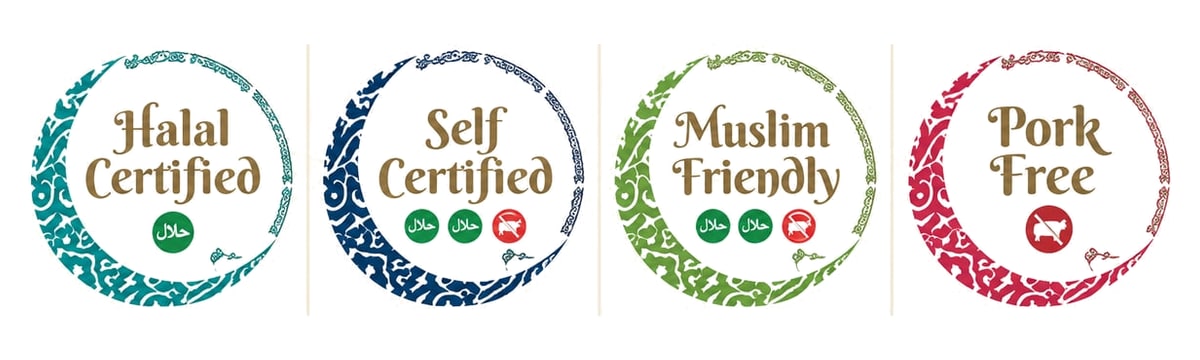
| Category | Scope | On-site check |
|---|---|---|
| Halal Certified (KMF) | Audited meat, ingredients, kitchen, alcohol-free | Certificate expiry & branch address |
| Self-Certified | Muslim-owned with halal sourcing, no KMF cert | Confirm all meats & alcohol-free policy |
| Muslim Friendly | Selected halal dishes; alcohol/non-halal may exist | Booking need, dish list, utensil separation |
| Pork-Free | No pork; other meats usually non-halal | Treat as pork filter; check seafood/veg |
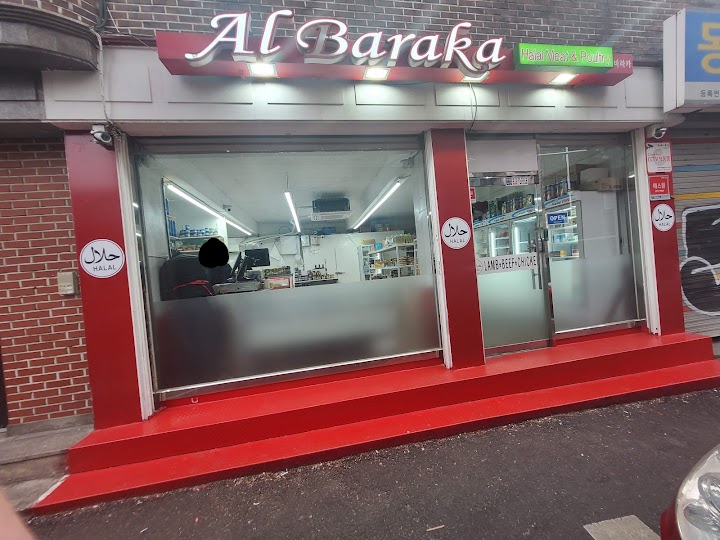
Stickers can stay up after ownership or menus change
Old tourism stickers and outdated blog lists frequently remain online or on shop windows even after a restaurant changes owners, switches suppliers, or stops renewing its certificate. Halalmap records sources and check dates rather than declaring a venue certified on its own.
How KMF certification works & international recognition
Founded in 1967 and certifying halal since 1994, the Korea Muslim Federation (KMF) audits ingredients, halal slaughter provenance, storage separation, and alcohol-free kitchens. Certificates apply per branch address and require periodic renewal—which is why many small Muslim-owned venues operate as Self-Certified instead.
| Body | Region | Practical note |
|---|---|---|
| KMF | South Korea | Domestic food & restaurant certifier (per branch) |
| JAKIM | Malaysia | MRA partner; common on Korean export packs |
| MUIS | Singapore | Recognizes KMF for eligible Korean exports |
| BPJPH / MUI | Indonesia | MRA partner; domestic Korean packs differ |
| CICOT · IFANCA | Thailand · USA | MRA partners; seen on imported halal meats in Korea |
Choosing by Korean neighborhood & dining situation
Availability of certified restaurants varies sharply across South Korea. Adjust your filtering approach by area and meal type.
| Area / Situation | Typical landscape | Recommended approach |
|---|---|---|
| Itaewon & COEX | Highest KMF & Muslim-owned density | Best anchor for certified & halal Korean meals |
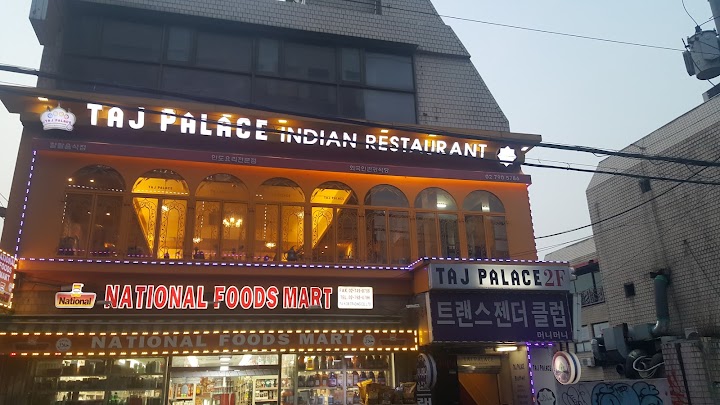
| Myeongdong, Hongdae & Gangnam | Mostly Muslim-owned or Muslim-friendly | Check alcohol policy & grill separation on Halalmap |
| Busan, Jeju & regional cities | Very few formal KMF venues | Mix verified spots with simple grilled fish/seafood |
| Hotel buffets & tour groups | Selected hotels offer halal corners | Confirm utensils & reserve 1–3 days ahead |
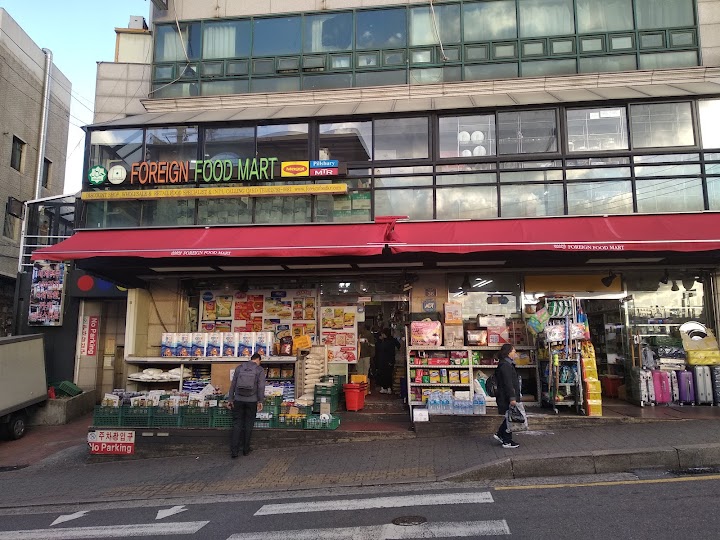
| Convenience stores & marts | Mostly uncertified domestic stock | Read MFDS allergen box & 원재료명 directly |
Four quick checks on-site & vegan vs. halal marks
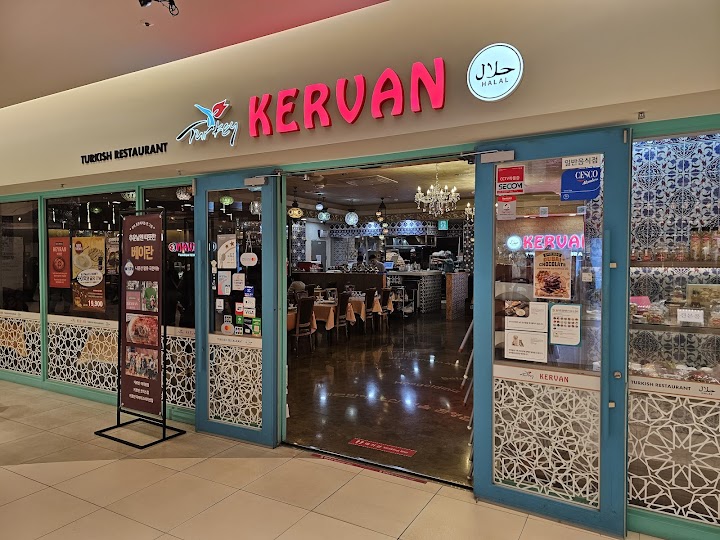
- Look for the certificate expiry date and branch address, not just a generic 'HALAL' window sticker.
- Check whether alcoholic drinks (soju, beer, makgeolli) appear on the menu or in the cooler.
- Where only certain dishes are halal, confirm which items qualify and whether grills or fryers are separated.
- On packaged snacks and ramyeon, inspect the actual pack in your hand—overseas export packs with KMF/JAKIM/MUI/MUIS logos often use different formulas from domestic Korean stock.
30-second on-site check when no KMF certificate is displayed
Step 1: Scan the menu board and cooler for pork or alcohol. Step 2: At a Muslim-owned shop without a framed certificate, ask whether all meat is halal-sourced. Step 3: At a local seafood, grilled fish, or vegetable restaurant, show the Korean request card to confirm broth (육수), cooking wine (미림·청주), and side dishes (반찬).
Korea Vegan Certification vs. Halal Certification
The Korea Agency of Vegan Certification (한국비건인증원) mark excludes animal ingredients and gelatin, which removes meat risks. However, Korean vegan standards still permit plant-derived or synthetic ethanol (주정), so check sauces and snacks for alcohol.
How to read halal details on Halalmap
Each restaurant page on Halalmap breaks down individual facts—such as certification status, Muslim ownership, pork-free status, alcohol policy, and notes from the business's own website—rather than compressing everything into a single pass-or-fail stamp. Always check the date next to each source.
Frequently asked questions
- Does 'Muslim-friendly' in Korea mean the whole restaurant is halal-certified?
- No. Under KTO's classification, 'Muslim-friendly' means some dishes are prepared for Muslim diners, while the restaurant may still serve non-halal items or alcohol. Official certification is listed separately as 'Halal Certified'.
- Is KMF recognized internationally?
- Founded in 1967 and operating halal certification since 1994, the Korea Muslim Federation (KMF) holds mutual recognition agreements with major bodies including Malaysia's JAKIM, Singapore's MUIS, Indonesia's BPJPH/MUI framework, Thailand's CICOT, and IFANCA in the United States. Specific product eligibility should still be verified with each importing authority.
- Why do online lists report different numbers of KMF-certified restaurants?
- Restaurants open, close, change ownership, or let annual certificates lapse, while travel blogs rarely re-audit old lists. Checking the physical certificate date at the venue and recent community reports is more reliable than relying on a fixed count from an old article.
- Is Korean vegan certification the same as halal certification?
- No. Korean vegan certification guarantees the absence of animal ingredients and gelatin, which is helpful when avoiding pork or non-halal meat, but it still allows plant-derived ethanol (주정). Always check the ingredient list for alcohol or cooking wine.
- If one branch of a Korean restaurant brand is KMF-certified, are all branches certified?
- No. Restaurant halal certificates in Korea are issued per specific branch and address. Even under the same brand name, always verify the certificate displayed at the branch you actually visit.
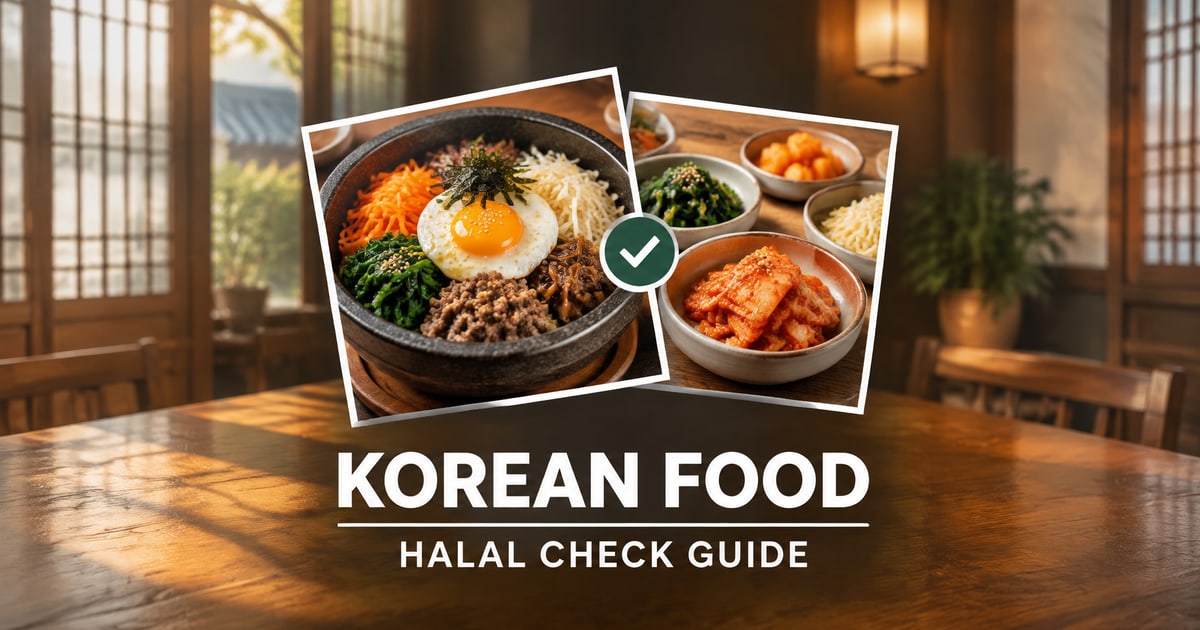
Is Korean Food Halal? Dish-by-Dish Ingredient Guide
Most everyday Korean dishes are not automatically halal because of non-halal meat, pork-based broths, fermented pastes containing ethanol, or shared fryers. Here is what to check dish by dish and how to ask staff in Korean.
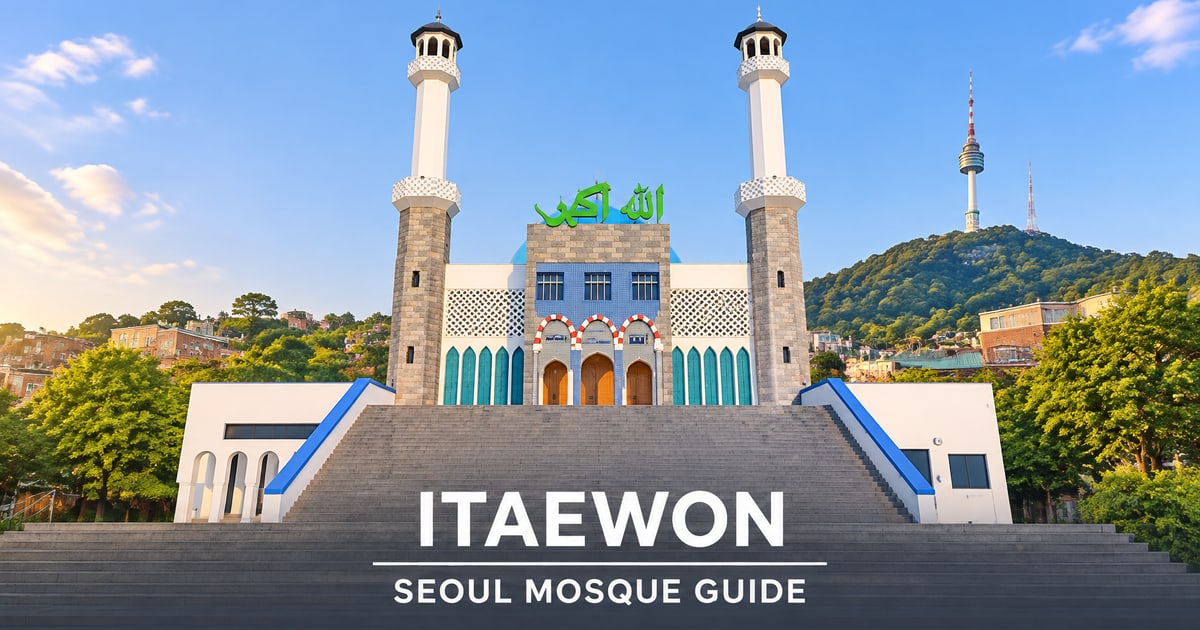
Itaewon Halal Food & Seoul Central Mosque Walking Guide
Itaewon and the uphill Usadan-ro lane around Seoul Central Mosque form South Korea's densest halal dining and grocery district. Here is how to plan transit, prayer, dining, and shopping in one walking route.

Mosques & Prayer Rooms in Seoul: Practical Visitor Guide
Outside Itaewon, prayer spaces in Seoul are mostly compact prayer rooms inside universities, major shopping complexes, hospitals, or community centers. Here is what to expect regarding wudu, access rules, and daily planning.
Have a question about this topic?
Ask fellow Muslim travelers in the Halalmap community or share your latest on-the-ground experience.
Check before visiting
Halalmap does not issue halal rulings. Menus, ingredients, certification status, and prayer facilities can change over time, so please confirm directly with staff or facility operators before visiting.